I started my first RRtY1 series in October 2023, the second in October 2024 and the third and fourth in October 2025. I’m now doing two years simultaneously because… well it seems manageable and I don’t want to take ten years to get the Ultra (x10) RRtY Award. If I keep going with two a year I’ll get that in 2029.
Why you may ask does it matter. Getting the award does not matter at all. It’s what goes into getting it and what I get out of that which is what really matters. I suppose that’s not so different from any endeavour.
Each year I have and plan to ride an SR2 series then a 200k for each of the remaining months of the season. Anything more is a bonus.
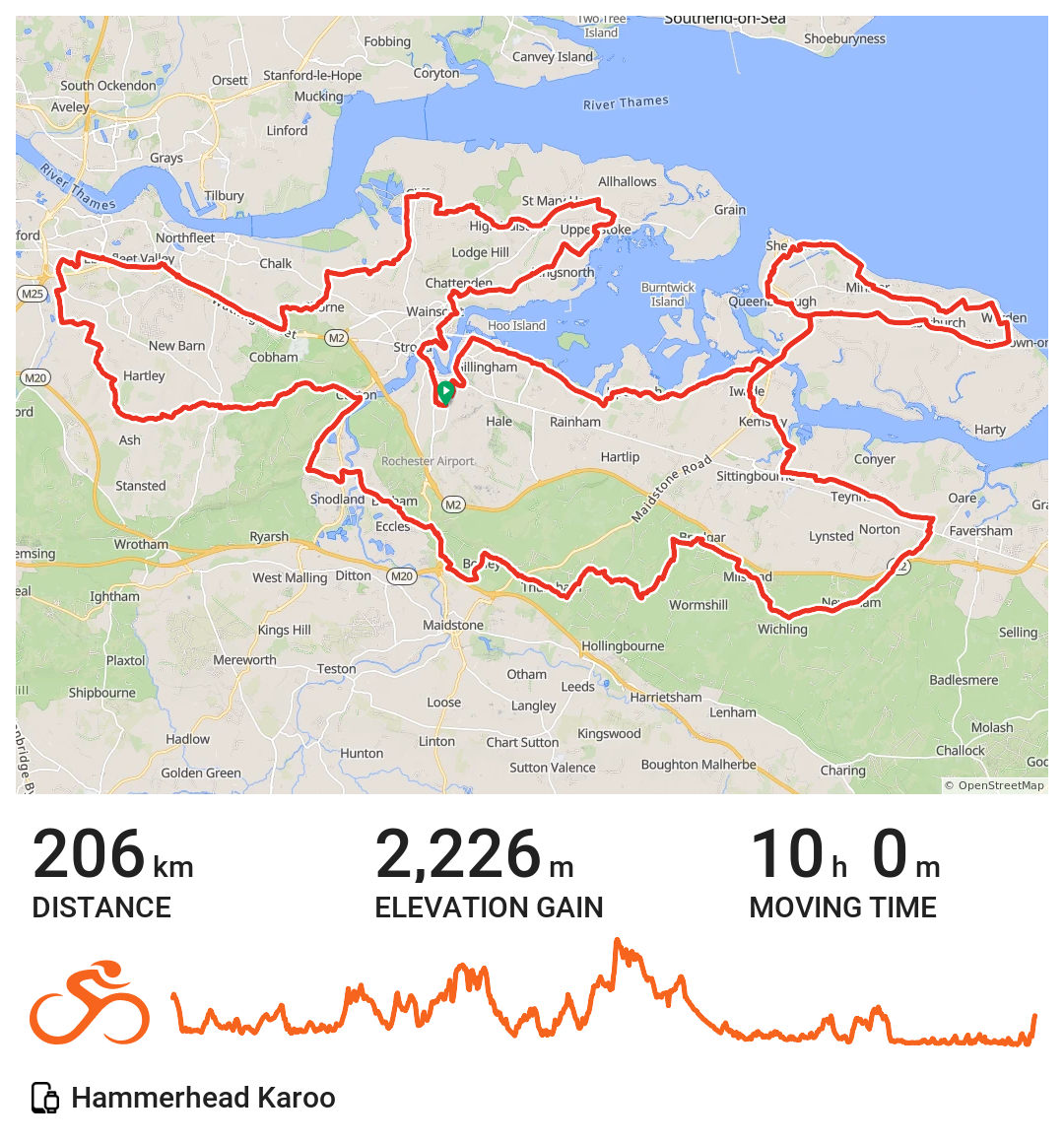
So I’m five months into the two simultaneous RRtY series I am completing in 2025/2026. Yesterday I rode the first of two rides to get in for February. I followed country lanes and roads I have ridden before and know very well. This was however the first time I joined them all up to make a 200k DiY3 ride.
Although I covered just over 200k I was never much more than 50k from home at any point. It was grey and drizzly for much of the day which also meant it was fairly mild.
Flatish at the beginning on a loop of the Hoo Peninsula and towards the end on another loop but this time round the Isle of Sheppey. Plenty of climbing and coasting downhill in the middle section across the the North Downs. All in all it was a varied ride that mostly avoided busy roads and showed off the contrasting topography found in North Kent. It would make a great ride on a dry and sunny day.
Anyhow, the ride did not prompt writing this post. I attribute that to my new found interest in fuelling myself on the bike. I have taken to making “portable” snacks to keep me going while out on the road. Following recipes in the book “Feed Zone Portables” by Biju Thomas and Allen Limm. I started with making banana and walnut quick crusts, then had a go at some mushroom & swiss frittatas. Yesterday I took a turn with shaped and baked date and almond rice balls. My competence is growing -
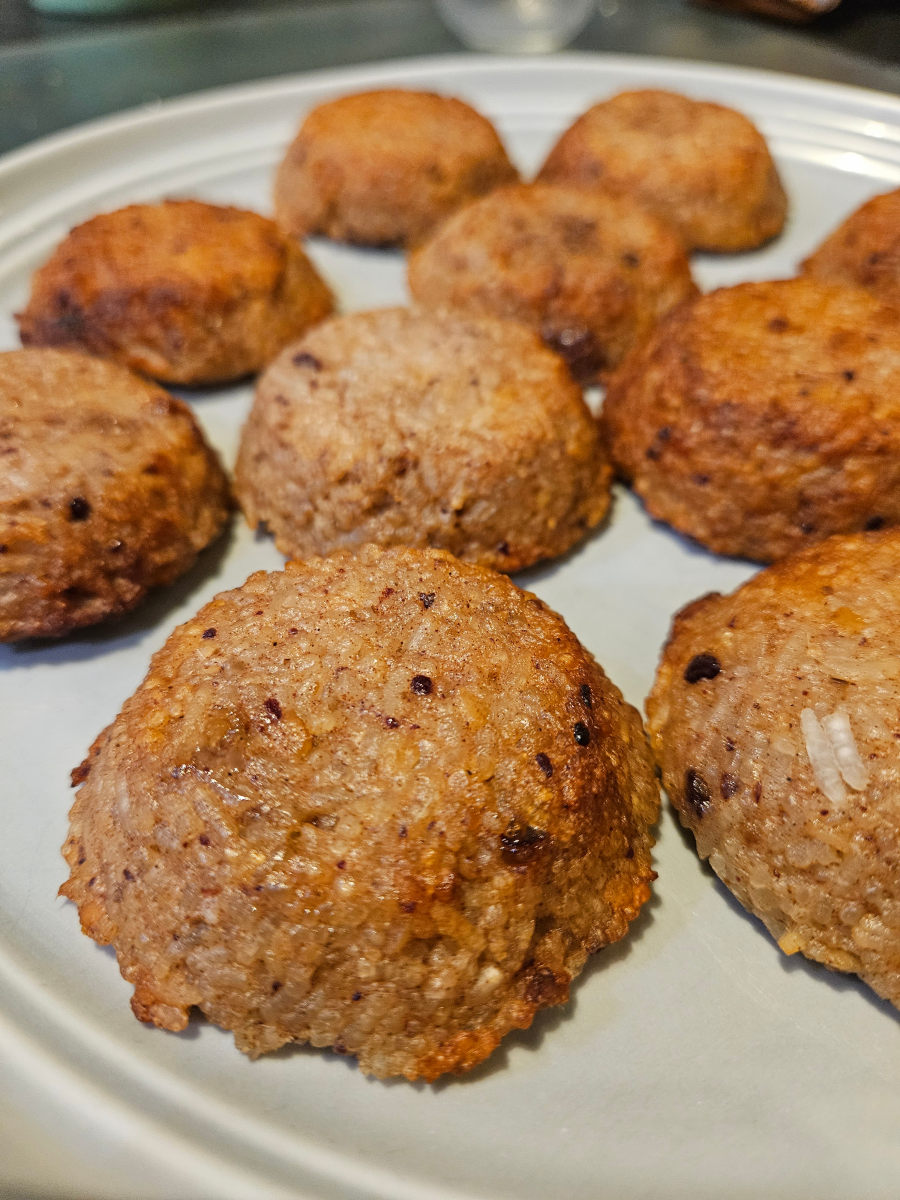
I made eleven of them and came back with five. The only other thing I ate on the ride was a packet of Frazzels when I stopped to top up my water bottle. Pretty pleased with that.
Less stopping equals less faffing hence time management improves. I know — 10 hrs. I put that down in part to giving blood the previous Friday. More to the point though is that I can sustain 20kmp/h over very long distances so I’m pretty okay with this to help prepare for the ride I have planned from Calais to near enough Lisbon over 11 days in May. Not that I shall be able to bake any such treats on the way but all the same I think it will help develop part of the mindset I need to get there within the time I have to do it.
The Randonneur Round the Year (RRtY) Award. The award is earned with a validated Brevet de Randonneur (BR4) or Brevet de Randonneur Mondiaux (BRM5) completed in each of any 12 consecutive calendar months. There are also RM (Randonneurs Mondiaux) events which are 1200km (usually 90 hour time limit) or longer (time limit based on nominal distance and speed limits similar to those for BR rides4) ↩︎
The Super Randonneur (SR) award consists of the BR(M) series: 200 km, 300 km, 400 km, 600 km, all completed in the same Randonneur year. ↩︎
DIY events allow riders to plan and schedule their own events and still have them validated by Audax UK. You can choose not only the date of your ride but the route itself and all of the controls6 along the way. For simplicity you can ride a Mandatory route DIY by GPS. For mandatory by GPS DIYs the planned route distance determines your time allowance and points. I always plan and complete a mandatory route of 200km or more (which classify as a BR event) for my DiYs. The minimum speeds set out in 4 apply. ↩︎
BR (Brevets de Randonneurs) events are at any distance over 200km, and are validated only by AUK. Whilst not dissimilar in conduct to BRM events the speed limits are subtly different. The maximum time allowed is based on the actual distance of the event and a minimum speed set by the organiser, usually 14.3km/h or 15km/h for events less than 600km. Lower minimum speeds are allowed in the AUK Regulations for longer events.
↩︎ ↩︎ ↩︎Distance Minimum Speed 200 to 600 km 14.3 to 15 km/h 700 to 1200 km 13-1/3 km/h 1300 to 1800 km 12 km/h 1900 to 2400 km 10 km/h 2500 km 8-1/3 km/h BRM (Brevets de Randonneurs Mondiaux) events are run all around the world under the standard set of rules laid down by the ACP (Audax Club Parisien) and the rides are validated and recorded by them. They are at standard distances, with a maximum of 5% over distance, and the maximum time limits for each distance is:
↩︎Distance Time Limit 200km 13h30m 300km 20h 400km 27h 600km 40h 1000km 75h It’s an Audax thing. Routes are defined by a sequence of checkpoints (controls) to an agreed time schedule, evidenced by “proofs of passage” collected along the way. Controls are required at regular intervals to allow for rest and refreshment. Controls should be at intervals around the route of between 50 km and 80 km. For GPS DIYs there is no need to be too precise as this is just a summary. ↩︎
💬 Any thoughts? I’d be happy to hear from you via LetterBird. 💬